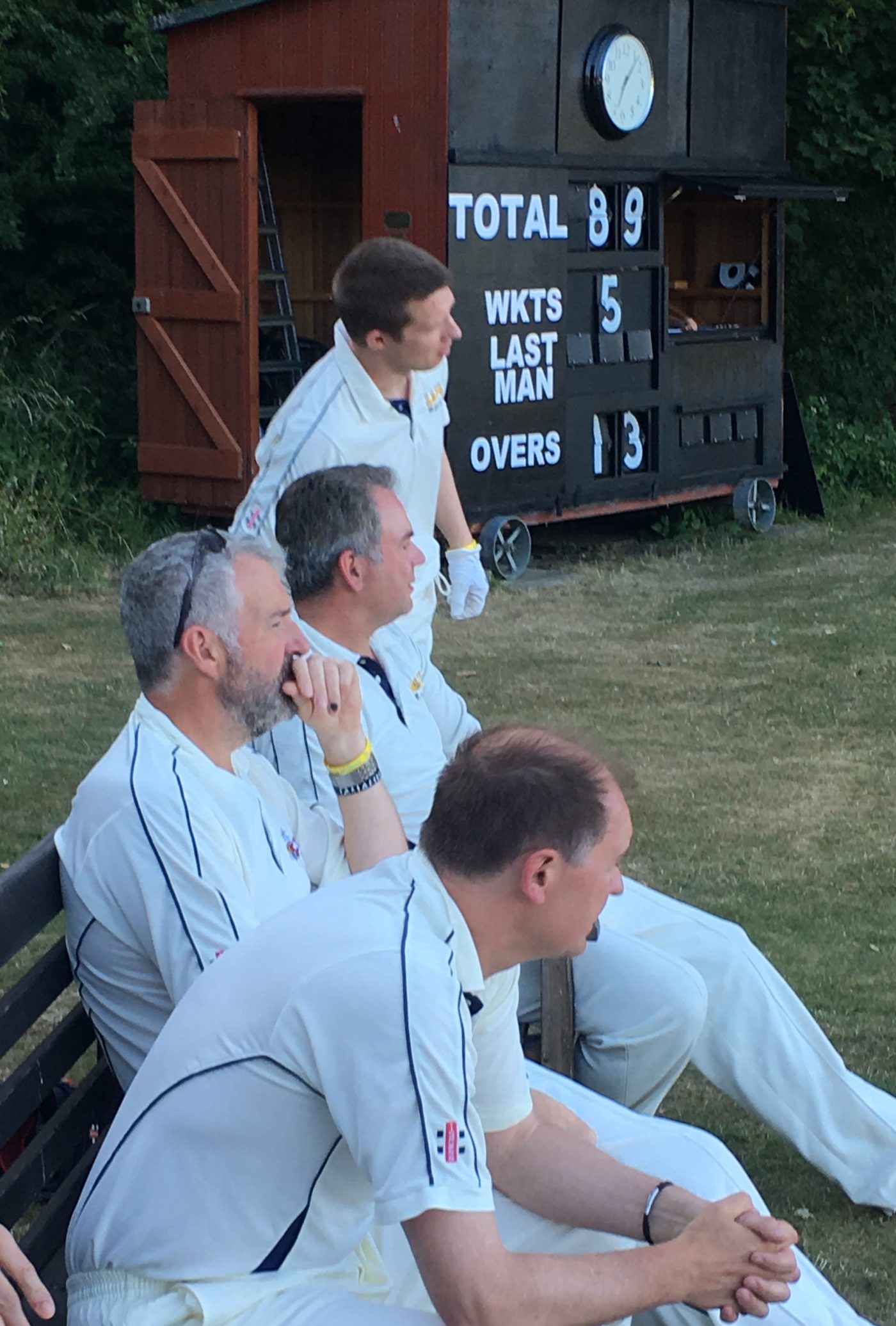

What a day it was yesterday at Lord’s, the cathedral of cricket!
Like all cricket club captains, I have spent the day fielding questions on Super Overs, although in my case interspersed with the occasional query about Supernovas as the Open University research project on space law and governance counts down to its launch.
This is the second of two big questions about yesterday’s cricket final, the other being whether it should have been 6 or 5 runs when the ball deflected off Ben Stokes’s bat to the boundary as he dived to complete a second run in the last of the scheduled fifty overs. Today’s question for captains and all players is who would be your choices from your club for Super Over batsmen and bowler.
More generally, super overs have suddenly become a cricketing craze. When the opposition cry off, as happened ahead of Sunday’s fixture, claiming that they could only raise three or four players, we could invite those chosen few across for a Super Over, with our players and spectators making up their fielding side.
Similarly, in our working lives, Super Overs are already taking over from penalty shoot-outs as the default mechanism for speculation about resolving ties. If two units of assessment are ranked equally in the Research Excellence Framework 2021 exercise, let’s put our best two or three articles up against theirs, to see which team’s big-hitters have the greater impact.
In the straightforward context of cricket, however, it would be a challenge for any village club captain to choose the batsmen most likely to score highly off six balls or to choose the bowler most likely to restrict the scoring of the opposition.
For example, our club vice-captain won a game I was playing in from the unlikeliest of positions, hitting 26 off the penultimate over bowled by the best bowler on the field. Unfortunately for me, this was the annual intra-club game we held on our President’s Day and I was leading the other side. So he would be a candidate if we were focusing on 6s. On the other hand, even though he is a fast runner between the wickets, he was tested by a swift three the other week so if our intention was to scamper runs, we might go for a teenage sprinter combination. Two of our swiftest runners have also, incidentally, hit big 6s.
As for the bowler, although both international sides went for quicker bowlers and we have various good pace bowlers, we also have an off-spinner who has taken a hat-trick for us, against the Cricket Society, all clean bowled. Taking a wicket in a Super Over would usually be decisive so I would be tempted in that direction.
The prudent captain’s answer, however, when questioned about Super Over choices would be to say that it depends on what had just happened in the match. The captains of the teams batting or bowling second might also adjust their choices depending on what happens in the other side’s innings. Chasing or defending 15 or 16 is a different enterprise from the target being 5 or 6.
Making such decisions under pressure is a good analogy to leadership in other walks of life. In cricket and in the wider world, however, there are many more detailed choices which make a difference and everyone in a team can be the person whose actions determine the outcome. In yesterday’s world cup final, for instance, the ball came to Jason Roy three times out of six in the final Super Over (which had seven balls but the first, a wide, was by definition not hit). He fumbled the first and returned the second adequately without running out a New Zealander. On the last ball, it came to him again but this time his fielding was quick enough to get the ball to the wicket-keeper Jos Buttler so that he could gather it, get to the stumps and complete the run out which tied the scores and made England the world cup winners by virtue of having scored more boundaries.
So where you place each fielder, who goes where, and how they react under pressure are all factors which determine the result. Jason Roy should have been out LBW to the first ball of England’s innings. He could not have expected to have to field for one Super Over hours later, let alone to have the whole destiny of the cup depend on his fielding on the last ball.
Talking of placing and timing being everything, you will probably always remember where you were when this Super Over drama was happening. I know where I was, as a young boy, when President John F Kennedy was shot and when England won the football world cup. Just after my undergraduate final exams, I was at Lord’s 40 years ago when England lost the world cup final. Yesterday, I was nearby but in church at the baptism of our youngest grandchild, and then at the celebration party. The godfather, not a relative, is someone I have met before, playing against us at Middleton Stoney CC. He becomes captain of his club side next season. I was impressed that he (like all of us) was missing the greatest match in cricketing history and that he (unlike the rest of us, who had opted for more conventionally religious presents) had chosen as his Christening gift a cricket bat.
 Up To You, Skip