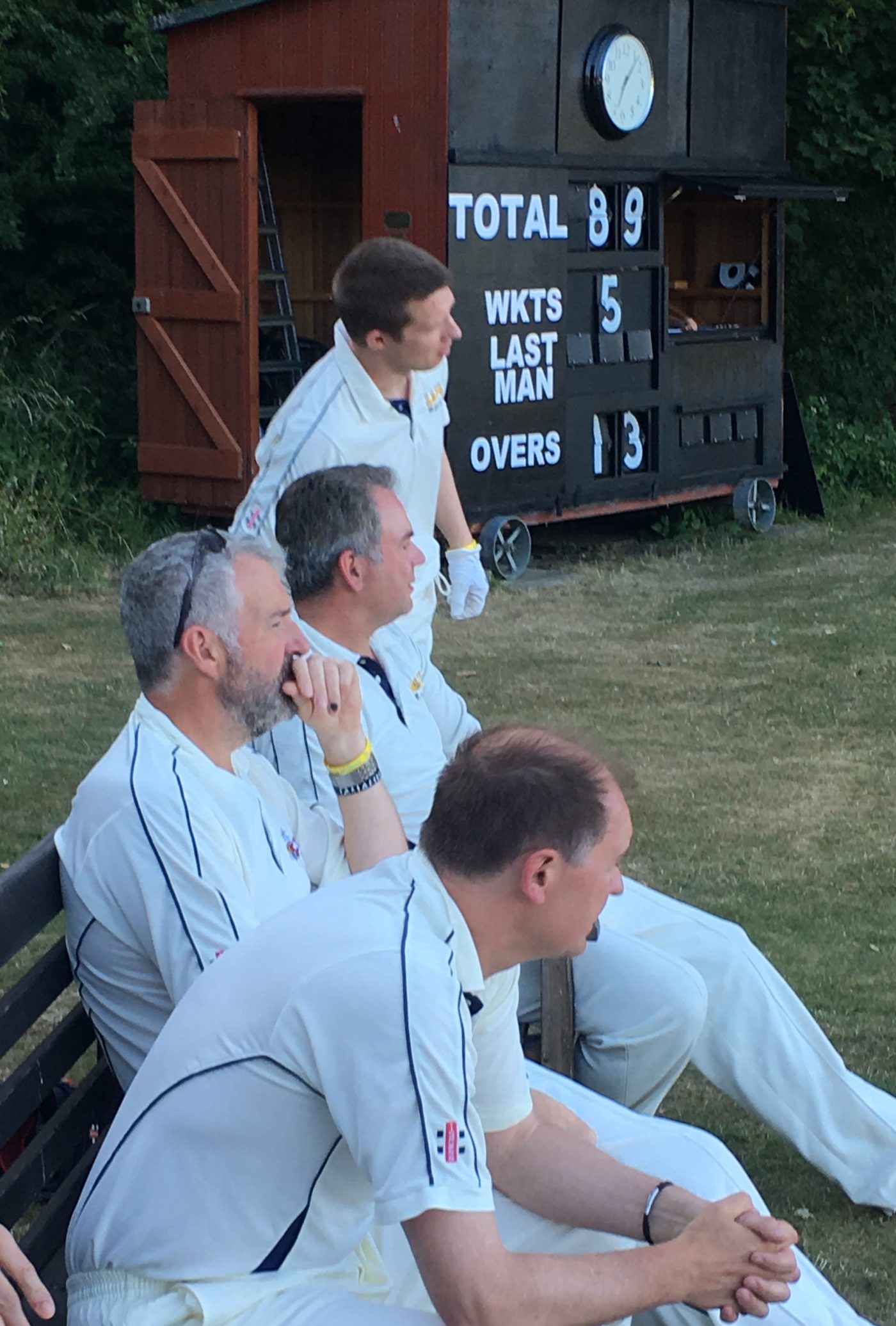
Diary of my 50th season as a captain, from Gillingham Grammar School Under 12s in 1969 to Middleton Stoney CC in 2019.
A grassroots cricketer’s supplement to Mike Brearley’s The Art of Captaincy

This is a grassroots cricketer’s supplement to Mike Brearley’s brilliant guide to the art of captaincy and its lessons for life beyond boundaries.
Mike Brearley captained England to victory in some famous Test matches, led the MCC on four tours, and combines his immense cricketing brain with his profound work in psychoanalysis, but what do they know of cricket captaincy who only Test and County and University cricket captaincy know?
By the standards of village cricket, for example, Brearley was here today and gone tomorrow. Well, he was here and there again, and again, but still, it wasn’t as if he stuck out this captaincy game for fifty years.
In contrast, this is my chronicle of the 2019 season, my fourth and probably last year as captain of Middleton Stoney Cricket Club, with occasional references back to 1969, when I was captain of Gillingham Grammar School Under-12s, and to life in between. The U-12s led to being captain of the U-13s, U-14s, U-15s and then, after a year in the 2nd XI, leading the 1st XI for two years. I was also captain of Balliol College Cricket in 1978 and have led a few organisations beyond the boundaries of cricket, for instance Liverpool Hope University College and Leeds Metropolitan University.
Mike Brearley was a much better player than he was given credit for, whereas I am even worse than would be apparent if I were not captain. It could be said of both of us, however, that we know what it is to be the worst player in a team we are leading.
Indeed, that might be why I have been made captain of various teams, and I don’t just mean universities. It suits the better players of Middleton Stoney CC that someone will bat at 11 and bowl themselves sparingly.
Some textbooks on batting emphasise the importance of reading the spin on the ball as someone like Shane Warne delivers it. The club captain’s equivalent is discerning the spin on a comment or in a look. Every club member has an opinion on how a team should be led and most have even more subtle variety in their comments and expressions than in their bowling or shot selection. It does not do them justice to reduce to one standard response their infinite inflections of doubt and disagreement.
For present purposes, though, just imagine that a captain asks, ‘Would you mind not opening today, to give someone else a chance?’ or ‘I think I’ll give you a break after one more over, if that’s OK?’ or ‘If I win the toss, do you think I should put them in to bat?’. Back will come the reply: ‘Up to you, skip’. Roughly translated, this means, ‘You’re the captain, so you can do what you want but I will sulk and you should take the blame if you insist on such a daft course of action’.
So I will be jotting down a few thoughts on captaincy, cricket and life this season. My intention is to offer fifty insights into captaincy mistakes and other features of our club life, not just a running commentary on the games but looking back to our close season preparations and to how a captain can keep getting elected, despite everything, including results.
For a start, I wasn’t playing today in the opening game of the season. It’s Easter Sunday (thanks, Fixture Secretary) so we went to church and then our son cooked lunch for us and for friends. We then strolled down to the ground at tea-time. The club’s Vice-Captain and Team Secretary were also unavailable but came to watch part of the match. So the skipper today was, you guessed it, our Fixture Secretary. We had by far the better of a drawn game, with the captain for the day clean bowling their opener with his, and our club’s, first ball of the season.
Mind you, I missed the opening game of last season, when it wasn’t Easter, because my wife was running in the London Marathon. This is as it should be in the lower reaches of village cricket because you only get to 50 years of captaincy by being a non-playing captain from time to time, whether or not you are on the team sheet.
So will this diary help you to lead your club or to lead your own life beyond boundaries? In the words of the poem known as Invictus by William Ernest Henley, popularised by Prince Harry and adapted by me for life beyond boundaries, will you be master of your village fête or captain of your soul? It’s, ‘Up to you, skip’.
 Up To You, Skip